DELAFIELD, Wis. (Stockpickr) -- At Stockpickr, we track daily portfolios of stocks that are the biggest percentage gainers and the biggest percentage losers.
>>3 Huge Stocks on Traders' Radars
Stocks that are making large moves like these are favorites among short-term traders because they can jump into these names and try to capture some of that massive volatility. Stocks that are making big-percentage moves either up or down are usually in play because their sector is becoming attractive or they have a major fundamental catalyst such as a recent earnings release. Sometimes stocks making big moves have been hit with an analyst upgrade or an analyst downgrade.
Regardless of the reason behind it, when a stock makes a large-percentage move, it is often just the start of a new major trend -- a trend that can lead to huge profits. If you time your trade correctly, combining technical indicators with fundamental trends, discipline and sound money management, you will be well on your way to investment success.
>>5 Stocks With Big Insider Buying
With that in mind, let's take a closer look at a several stocks under $10 that are making large moves to the upside.
Vringo
Vringo (VRNG), together with its subsidiaries, develops, acquires, licenses, protects and monetizes intellectual property worldwide. This stock closed up 1.9% to $3.62 in Wednesday's trading session.
Wednesday's Range: $3.45-$3.64
52-Week Range: $2.61-$5.45
Wednesday's Volume: 1.56 million
Three-Month Average Volume: 2.09 million
From a technical perspective, VRNG jumped modestly higher here right above its 200-day moving average of $3.36 and its 50-day moving average of $3.51 with decent upside volume. This spike higher on Wednesday is starting to push shares of VRNG within range of triggering a major breakout trade. That trade will hit if VRNG manages to take out Wednesday's intraday high of $3.65 and then once it clears some near-term overhead resistance at $3.69 with high volume.
Traders should now look for long-biased trades in VRNG as long as it's trending above its 200-day at $3.36 or above $3.20 and then once it sustains a move or close above $3.65 to $3.69 with volume that hits near or above 2.09 million shares. If that breakout materializes soon, then VRNG will set up to re-test or possibly take out its next major overhead resistance levels at $4.27 to $4.49. Any high-volume move above those levels will then give VRNG a chance to tag its 52-week high at $5.45.
Prana Biotechnology
Prana Biotechnology (PRAN) researches and develops therapeutic drugs for the treatment of neurological disorders in Australia. This stock closed up 4.2% to $2.10 Wednesday's trading session.
Wednesday's Range: $1.98-$2.15
52-Week Range: $1.47-$13.29
Wednesday's Volume: 1.86 million
Three-Month Average Volume: 1.97 million
From a technical perspective, PRAN spiked sharply higher here right above its 50-day moving average of $1.82 with decent upside volume. This spike higher on Wednesday pushed shares of PRAN into breakout territory, since the stock took out some near-term overhead resistance at $2.08. Shares of PRAN are now starting to move within range of triggering a much bigger breakout trade. That trade will hit if PRAN manages to clear Wednesday's intraday high of $2.15 to some more key overhead resistance at $2.24 with high volume.
Traders should now look for long-biased trades in PRAN as long as it's trending above its 50-day moving average of $1.82 and then once it sustains a move or close above those breakout levels with volume that hits near or above 1.97 million shares. If that breakout triggers soon, then PRAN will set up to re-test or possibly take out its next major overhead resistance levels at $2.47 to $2.70, or its gap-down-day high from March at $3.24.
PowerSecure International
PowerSecure International (POWR) provides products and services to electric utilities and to their commercial, institutional and industrial customers in the U.S. This stock closed up 2.6% to $8.49 in Wednesday's trading session.
Wednesday's Range: $8.22-$8.60
52-Week Range: $6.41-$27.44
Wednesday's Volume: 713,000
Three-Month Average Volume: 827,252
From a technical perspective, POWR spiked higher here right above some near-term support at $8 with decent upside volume. This stock recently formed a double bottom chart pattern at $7.40 to $7.59. Following that bottom, shares of POWR have started to spike higher and it's now moving within range of triggering a major breakout trade. That trade will hit if POWR manages to take out Wednesday's high intraday high of $8.60 to some more key overhead resistance at $9.16 with high volume.
Traders should now look for long-biased trades in POWR as long as it's trending above some near-term support at $8 or above those double bottom support levels and then once it sustains a move or close above those breakout levels with volume that hits near or above 827,252 shares. If that breakout begins soon, then POWR will set up to re-fill some of its previous gap-down-day zone from May that started above $20.
Turtle Beach
Turtle Beach (HEAR), an audio technology company, is engaged in developing, commercializing and marketing audio technologies under the Turtle Beach and HyperSound brands in the U.S., Europe, and internationally. This stock closed up 0.4% to $9.49 in Wednesday's trading session.
Wednesday's Range: $9.40-$9.64
52-Week Range: $7.58-$17.90
Wednesday's Volume: 57,000
Three-Month Average Volume: 191,992
From a technical perspective, HEAR trended modestly higher here right above some near-term support at $9 with lighter-than-average volume. This stock recently formed a double bottom chart pattern at $9 to $9.04. Following that bottom, shares of HEAR have now started to trend slightly higher and move within range of triggering a near-term breakout trade. That trade will hit if HEAR manages to take out some near-term overhead resistance levels at $9.89 to its 50-day moving average of $10.08 with high volume.
Traders should now look for long-biased trades in HEAR as long as it's trending above those double bottom support zones and then once it sustains a move or close above those breakout levels with volume that hits near or above 191,992 shares. If that breakout starts soon, then HEAR will set up to re-test or possibly take out its next major overhead resistance levels at $10.50 to $11.40. Any high-volume move above $11.40 will then give HEAR a chance to re-fill some of its previous gap-down-day zone from April that started near $13.50.
To see more stocks that are making notable moves higher, check out the Stocks Under $10 Moving Higher portfolio on Stockpickr.
-- Written by Roberto Pedone in Delafield, Wis.
RELATED LINKS:
>>5 Stocks Set to Soar on Bullish Earnings
>>5 Retail Stocks to Trade for Gains in June
>>3 Big-Volume Stocks to Trade for Breakouts
Follow Stockpickr on Twitter and become a fan on Facebook.
At the time of publication, author had no positions in stocks mentioned.
Roberto Pedone, based out of Delafield, Wis., is an independent trader who focuses on technical analysis for small- and large-cap stocks, options, futures, commodities and currencies. Roberto studied international business at the Milwaukee School of Engineering, and he spent a year overseas studying business in Lubeck, Germany. His work has appeared on financial outlets including
CNBC.com and Forbes.com.You can follow Pedone on Twitter at www.twitter.com/zerosum24 or @zerosum24.
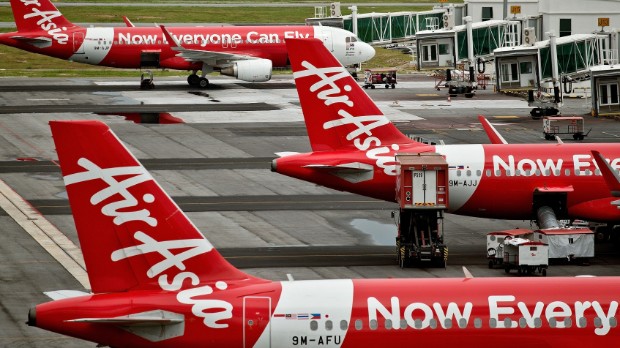 Technology could've tracked missing AirAsia flight NEW YORK (CNNMoney) When AirAsia Flight QZ8501 disappeared on Sunday, its black box and any evidence of what went wrong may have vanished with it.
  netflix.com Two of the market's biggest dot-com rock stars have had a rough 2014. Amazon.com (AMZN) -- the world's leading online retailer -- has seen its stock shed a quarter of its value this year. Netflix (NFLX) was the biggest gainer among the S&P 500 companies in 2013, but this year it's been a different story. The leading premium provider of streaming video has seen its shares slump nearly 10 percent so far this year. Netflix's slide may not seem so ominous, but keep in mind that the stock has shed nearly a third of its value since peaking just three months ago. That's a big drop in a short time, rivaling the disappointment Amazon investors have faced this year. Thankfully, history is on their side. Amazon hasn't posted back-to-back years of stock declines since 2001. Netflix has yet to post two consecutive years of negative returns since going public in 2002. This certainly doesn't guarantee that either company's stock will bounce back in 2015, but it does show that Amazon and Netflix have been able to bounce back from adversity. Bang a Gong, Amazon At least one Wall Street pro thinks the leading online retailer will bounce back in the year ahead. Piper Jaffray analyst Gene Munster put out a bullish note on Thursday, calling Amazon his favorite large-cap stock for 2015. He concedes that top-line growth may be decelerating, but argues that the market is being too hard on Amazon's recent margin crunch. The former dot-com darling is investing in everything from building out fulfillment centers offering speedier deliveries to establishing the server farms necessary to support its thriving Web services platform. The market also has ignored Amazon rolling out expensive Kiva robots at its warehouses that are reportedly at least three times as productive as humans without the downside of fatigue or rising labor costs. Munster has an ambitious $400 price target on the stock, suggesting nearly 35 percent of upside from here. Nothing but Netflix There wasn't a popular Wall Street analyst pounding the table for Netflix on Thursday, but a day earlier we did see DISH Network (DISH) announce a deal to integrate Netflix's streaming application into some of its set-top boxes. This is the first deal of this kind signed with a pay-TV provider, paving the way for more deals. At the very least, the integration validates the Netflix model. Unlike Amazon, which has been sliding through most of 2014, Netflix was holding up pretty well until its third-quarter results were announced in October. Netflix closed out the summer quarter with 3 million more subscribers than it had at the end of June. The market was hoping for more -- and perhaps more important, Netflix was forecasting for more -- but we still don't know if this was a fluke or if the historically conservative Netflix is starting to overestimate its appeal. Either way, you won't find too many premium subscription services tacking on a million net new users a month. Globe-Trotters One thing that ties Amazon and Netflix together is that they have become the two leaders of premium streaming video. Netflix is the undisputed top dog in this space, even if it has meant disrupting its own mail-based DVD rental business. Amazon has emerged as a legitimate competitor as it beefs up the digital smorgasbord that it makes available to Amazon Prime subscribers. The industry is paying attention. Earlier this month we saw Amazon ring up a pair of Golden Globe nominations for its original content. Netflix continues to build on the success of its proprietary content, landing seven nods this time around. More from Rick Aristotle Munarriz
 Paul Sancya/APDetroit skyline DETROIT -- A judge cleared Detroit to emerge from bankruptcy Friday, approving a turnaround plan that will require discipline after years of corruption, mismanagement and an exodus of residents brought this one-time industrial powerhouse to financial ruin. "What happened in Detroit must never happen again," Judge Steven Rhodes said in bringing the case to a close a remarkably speedy 16 months after Detroit -- the cradle of the auto industry -- became the biggest city in U.S. history to file for bankruptcy. The plan calls for cutting retiree pensions by 4.5 percent, erasing $7 billion of debt and spending $1.7 billion to demolish thousands of blighted buildings, make the city safer and improve long-neglected basic services. In signing off on the plan, Rhodes made a fervent plea to residents who expressed sorrow and disgust about the city's woes. "Move past your anger. Move past it and join in the work that is necessary to fix this city," he said. "Help your city leaders do that. It is your city."
 Subscribe via Email
  Subscribe RSS Comments Please leave your comment:
 MORE GURUFOCUS LINKS
  197.72 (1y: +17%) $(function(){var seriesOptions=[],yAxisOptions=[],name='SPY',display='';Highcharts.setOptions({global:{useUTC:true}});var d=new Date();$current_day=d.getDay();if($cu
 Movie theaters drop 'The Interview' NEW YORK (CNNMoney) "The Interview" got into trouble thanks to the Internet. But maybe the Internet can save it, too?
 Getty Images If the past year has taught consumers anything, it's that identity thieves, fraudsters and scammers are on the prowl, going after any information they can use to make a buck. But the intrusions don't stop there. If the thought of being the unwitting star of your own prime time reality show gives you the willies, consider the recent revelation that more than 73,000 unsecured webcams and surveillance cameras are, as I write this column, viewable on a Russian-based website. The site lists the cameras by country. (Unfortunately, the U.S. is well represented.) In every case, victims ignored safety protocols and installed the cameras with their default login and password-admin/admin or another easy-to-guess combination findable on any number of public-facing websites. According to NetworkWorld, "There are 40,746 pages of unsecured cameras just in the first 10 country listings: 11,046 in the U.S.; 6,536 in South Korea; 4,770 in China; 3,359 in Mexico; 3,285 in France; 2,870 in Italy; 2,422 in the U.K.; 2,268 in the Netherlands; 2,220 in Colombia; and 1,970 in India. Like the site said, you can see into 'bedrooms of all countries of the world'. There are 256 countries listed plus one directory not sorted into country categories." Why It Matters You may remember the sextortionist who hacked into Miss Teen USA's computer camera and took compromising photographs. He tried to get money in exchange for not distributing the pictures, and got 18 months behind bars instead. That's a bit too lenient in my book. Unfortunately, there are thousands more slime-balls where these guys came from who are poking around, looking for ways to exploit the private moments of your life for their personal amusement or gain. The Internet of Things has arrived making homes smart, fitness totally interactive and tasks infinitely easier, but the devices we buy to streamline day-to-day life create vulnerabilities that, when exploited, could bring your day to a screeching halt, and the risks are much higher if you don't apply common sense during the setup of these password-protected devices. The rule here couldn't be simpler: Anything that hooks into a network must be locked down. Don't think it will happen to you? Consider this: There are websites that list the default passwords of all kinds of devices. If you have something wireless that's hooking up to your household router, it likely came with a pre-set password and login. And there's a good chance, whatever the device, there's a forum online where it's been figured out, hacked, cracked and hijacked for all stripe of nefarious purpose. Convenient ... for Everyone The added convenience provided by the Internet of Things is obvious, but the security issues may not be. Are your fitness records hackable by a third party? Are they linked to social media? How much information did that require? A login? A password? And what's to stop a hacker from opening your front door or turning off your heat during a blizzard or your lights during a home invasion: all with an app? Other common devices that are password protected should immediately come to mind here. Whether it is your household printer, your wireless router or your DVR, there are folks out there who are curious about you, not because they value you as a human being, but because they can create value from any plugged-in human-whether by fraud or extortion or (in a more old-fashioned mode) getting the information they need to rob you blind when you're not home. The number of people who don't change default passwords is staggering, as evidenced by the 73,000 wide-open webcams on that Russian website. There's a major disconnect here, and it's specific to the Internet of Things. On the Internet proper, it seems the message has finally seeped in and people are beginning to make themselves harder targets -- making sure their privacy settings are tight and their passwords are both strong and changed frequently. But when it comes the Internet of Things, there is still more learning to be done -- hopefully not Miss Teen USA-style. The solution, for this particular problem, is remarkably simple: Set a long and strong password on all devices. Whatever it is, it's your job to pick something easy for you to remember and hard for others to guess. The Bigger Problem The Pew Research Center released a statistic this month that showed 90 percent of Americans believe they have no control over their personal information-that the facts and figures and ciphers unique to them are simply in too many places, and essentially that the data cat's out of the bag. Breaches have crossed the Rubicam. Whether they are of the unavoidable variety or the product of carelessness, they will continue to happen apace. Now the third certainty in life, breaches have become the potholes on a bumpy road. What no one wants to deal with is the fact that the road ends abruptly -- jagged concrete and rebar sticking out -- and there's nothing but air after that, and a whole lot of it, between you and the endless crimes that can be committed against you.
  Svanblar/Shutterstock A common antimicrobial agent called triclosan causes liver fibrosis and cancer in laboratory mice through mechanisms also relevant to humans, researchers at the University of California, San Diego School of Medicine have found Triclosan's broad use in consumer goods -- including liquid hand soaps, toothpastes, shampoos, cosmetics, plastics, yoga mats, cutting boards and ice cream scoops -- presents "a very real risk of liver toxicity for people, as it does in mice," said Robert H. Tukey, a UC-San Diego professor and co-author of the study, published Monday in Proceedings of the National Academy of Sciences. Triclosan, a synthetic, broad-spectrum antibacterial chemical, is coming under fire because of its links to endocrine disruption that could cause infertility, impaired muscle function and now increased cancer risks. It's All Around The UC-San Diego study showed that mice exposed to triclosan for six months (roughly equivalent to 18 human years) had more and larger chemical-induced liver tumors than mice not exposed to the antimicrobial. Researchers believe triclosan may interfere with the protein responsible for detoxifying foreign chemicals in the body, thereby causing liver cells to proliferate and, over time, become cancerous tumors. Studies have found traces of triclosan in 97 percent of breast milk samples from lactating women and in the urine of nearly 75 percent of people tested, according to a statement by UC San Diego Health System. Triclosan is also one of the seven most frequently detected compounds in streams across the United States, the statement says. "We could reduce most human and environmental exposures by eliminating uses of triclosan that are high-volume, but of low-benefit, such as inclusion in liquid hand soaps," said Bruce D. Hammock, professor at University of California, Davis. "Yet we could also for now retain uses shown to have health value -- as in toothpaste, where the amount used is small." Colgate-Palmolive (CL) recently came under fire because its Total toothpaste contains triclosan. A recent Care2 petition, asking Colgate to remove triclosan from its toothpaste, so far has received almost 68,000 signatures. Triclosan is already under scrutiny by the U.S. Food and Drug Administration. On its website, the FDA says, "Triclosan is not currently known to be hazardous to humans. But several scientific studies have come out since the last time FDA reviewed this ingredient that merit further review." More from Lisa Kaplan Gordon
 The most common homeowner complaint is that the house is too small. NEW YORK (CNNMoney) Big purchases often come with big expectations.
 Getty Images The NYSE use to look like this. This is New York Mercantile Exchange.